The New Smart Hub -- Samsung CES 2013 Press Conference

The new Samsung Smart Hub provides a simple, intuitive way to access programs faster and easier. ...

Kingstons Pricey 1 TB USB 3.0 Flash Drive!

Imagine being able to save hundreds of movies, music, photos, documents, and almost everything off your computer and take them with you in your pocket....

BMW wants to make your car a 4G LTE Mobile Hotspot

BMW is now offering in-car connectivity via a 4G LTE device as a part of its accessory program...

Microsoft Surface Pro Hands-On: This Is What It Should Have Been All Along

Surface RT was an enormous let down—not because it was bad, but because it could have been so, so good...

Saturday, January 5, 2013

Quantum Gas Goes below Absolute Zero


Ultracold atoms pave way for negative-Kelvin materials


14
Share


sub-absolute-zero, quantum gas, thermometer, temperatureTemperature in a gas can reach below absolute zero thanks to a quirk of quantum physics.Image: PHOTOCREO Michal Bednarek/Thinkstock
From Nature magazine
It may sound less likely than hell freezing over, but physicists have created an atomic gas with a sub-absolute-zero temperature for the first time. Their technique opens the door to generating negative-Kelvin materials and new quantum devices, and it could even help to solve a cosmological mystery.
Lord Kelvin defined the absolute temperature scale in the mid-1800s in such a way that nothing could be colder than absolute zero. Physicists later realized that the absolute temperature of a gas is related to the average energy of its particles. Absolute zero corresponds to the theoretical state in which particles have no energy at all, and higher temperatures correspond to higher average energies.
However, by the 1950s, physicists working with more exotic systems began to realise that this isn't always true: Technically, you read off the temperature of a system from a graph that plots the probabilities of its particles being found with certain energies. Normally, most particles have average or near-average energies, with only a few particles zipping around at higher energies. In theory, if the situation is reversed, with more particles having higher, rather than lower, energies, the plot would flip over and the sign of the temperature would change from a positive to a negative absolute temperature, explains Ulrich Schneider, a physicist at the Ludwig Maximilian University in Munich, Germany.
Peaks and valleys
Schneider and his colleagues reached such sub-absolute-zero temperatures with an ultracold quantum gas made up of potassium atoms. Using lasers and magnetic fields, they kept the individual atoms in a lattice arrangement. At positive temperatures, the atoms repel, making the configuration stable. The team then quickly adjusted the magnetic fields, causing the atoms to attract rather than repel each other. “This suddenly shifts the atoms from their most stable, lowest-energy state to the highest possible energy state, before they can react,” says Schneider. “It’s like walking through a valley, then instantly finding yourself on the mountain peak.”
At positive temperatures, such a reversal would be unstable and the atoms would collapse inwards. But the team also adjusted the trapping laser field to make it more energetically favourable for the atoms to stick in their positions. This result, described today in Science, marks the gas’s transition from just above absolute zero to a few billionths of a Kelvin below absolute zero.
Wolfgang Ketterle, a physicist and Nobel laureate at the Massachusetts Institute of Technology in Cambridge, who has previously demonstrated negative absolute temperatures in a magnetic system, calls the latest work an “experimental tour de force”. Exotic high-energy states that are hard to generate in the laboratory at positive temperatures become stable at negative absolute temperatures — “as though you can stand a pyramid on its head and not worry about it toppling over,” he notes — and so such techniques can allow these states to be studied in detail. “This may be a way to create new forms of matter in the laboratory,” Ketterle adds.
If built, such systems would behave in strange ways, says Achim Rosch, a theoretical physicist at the University of Cologne in Germany, who proposed the technique used by Schneider and his team. For instance, Rosch and his colleagues have calculated that whereas clouds of atoms would normally be pulled downwards by gravity, if part of the cloud is at a negative absolute temperature, some atoms will move upwards, apparently defying gravity.
Another peculiarity of the sub-absolute-zero gas is that it mimics 'dark energy', the mysterious force that pushes the Universe to expand at an ever-faster rate against the inward pull of gravity. Schneider notes that the attractive atoms in the gas produced by the team also want to collapse inwards, but do not because the negative absolute temperature stabilises them. “It’s interesting that this weird feature pops up in the Universe and also in the lab,” he says. “This may be something that cosmologists should look at more closely.”
This article is reproduced with permission from the magazine Nature. The article wasfirst published on January 3, 2012.
via: http://www.scientificamerican.com/article.cfm?id=quantum-gas-goes-below-absolute-zero

How to Think Like Sherlock Holmes. The value of Creativity & Imagination!

Editor’s note: The following is an excerpt from Mastermind: How to Think Like Sherlock Holmes. Reprinted by arrangement with Viking, a member of Penguin Group (USA) Inc., Copyright © 2013 by Maria Konnikova.


“It is surprising that people do not believe that there is imagination in science,” Nobel-winning physicist Richard Feynman once told an audience. Not only is that view patently false, but “it is a very interesting kind of imagination, unlike that of the artist. The great difficulty is in trying to imagine something that you have never seen, that is consistent in every detail with what has already been seen, and that is different from what has been thought of; furthermore, it must be definite and not a vague proposition.”
Imagination takes the stuff of observation and experience and recombines them into something new.
In 1968, the high jump was a well-established sport. You would run, you would jump, and you would make your way over a pole in one of several ways. In older days you’d likely use the scissors, scissoring out your legs as you glided over, but by the sixties you’d probably be using the straddle or the belly roll, facing down and basically rolling over the bar. Whichever style you used, you’d be facing forward when you made your jump. Imagine trying to jump backward. That would be ridiculous.
Dick Fosbury, however, didn’t think so. All through high school, he’d been developing a backward-facing style, and now, in college, it was taking him higher than it ever had. He wasn’t sure why he did it. He didn’t care what anyone else was doing. He just jumped with the feeling of the thing. People joked and laughed. Fosbury looked just as ridiculous as they thought he would (and his inspirations sounded a bit ridiculous, too. When asked about his approach, he told Sports Illustrated, “I don’t even think about the high jump. It’s positive thinking. I just let it happen”). Certainly, no one expected him to make the U.S. Olympic team—let alone win the Olympics. But win he did, setting American and Olympic records with his 7-foot-4.25-inch (2.24-meter) jump, only 1.5 inches short of the world record.
With his unprecedented technique, dubbed the Fosbury Flop, Fosbury did what many other more traditional athletes had never managed to accomplish: he revolutionized, in a very real way, an entire sport. Even after his win, expectations were that he would remain a lone bird, jumping in his esoteric style while the rest of the world looked on. But since 1978 no world record has been set by anyone other than a flopper; and by 1980, thirteen of sixteen Olympic finalists were flopping across the bar. To this day, the flop remains the dominant high jump style. The straddle looks old and cumbersome in comparison. Why hadn’t anyone thought of replacing it earlier?
Fosbury wasn’t even a particularly talented jumper. It was all in the approach. Imagination allows us to see things that aren’t so, be it a dead man who is actually alive or a way of jumping that, while backward, couldn’t be more forward looking.
Keep Your Distance
One of the most important ways to facilitate imaginative thinking is through distance. In “The Adventure of the Bruce-Partington Plans,” a case that comes quite late in the Holmes-Watson partnership, Watson observes:
Maria Konnikova Photo Credit Margaret Singer and Max Freeman
Author Maria Konnikova. Courtesy of Margaret Singer and Max Freeman.
One of the most remarkable characteristics of Sherlock Holmes was his power of throwing his brain out of action and switching all his thoughts on to lighter things whenever he had convinced himself that he could no longer work to advantage. I remember that during the whole of that memorable day he lost himself in a monograph which he had undertaken upon the Polyphonic Motets of Lassus. For my own part I had none of this power of detachment, and the day, in consequence appeared to be interminable.
Forcing your mind to take a step back is a tough thing to do. It seems counterintuitive to walk away from a problem that you want to solve. But in reality, the characteristic is not so remarkable either for Holmes or for individuals who are deep thinkers. The fact that it is remarkable for Watson (and that he self-admittedly lacks the skill) goes a long way to explaining why he so often fails when Holmes succeeds.
Psychologist Yaacov Trope argues that psychological distance may be one of the single most important steps you can take to improve thinking and decision-making. It can come in many forms: temporal, or distance in time (both future and past); spatial, or distance in space (how physically close or far you are from something); social, or distance between people (how someone else sees it); and hypothetical, or distance from reality (how things might have happened). But whatever the form, all of these distances have something in common: they all require you to transcend the immediate moment in your mind. They all require you to take a step back.
Trope posits that the further we move in distance, the more general and abstract our perspective and our interpretation become; and the further we move from our own perspective, the wider the picture we are able to consider. Conversely, as we move closer once more, our thoughts become more concrete, more specific, more practical—and the closer we remain to our egocentric view, the smaller and more limited the picture that confronts us. Our level of construal influences, in turn, how we evaluate a situation and how we ultimately choose to interact with it. It affects our decisions and our ability to solve problems.
In essence, psychological distance accomplishes one major thing: it engages System Holmes. It forces quiet reflection. Distancing has been shown to improve cognitive performance, from actual problem solving to the ability to exercise self-control. Children who use psychological distancing techniques (for example, visualizing marshmallows as puffy clouds) are better able to delay gratification and hold out for a larger later reward. Adults who are told to take a step back and imagine a situation from a more general perspective make better judgments and evaluations, and have better self-assessments and lower emotional reactivity. Individuals who employ distancing in typical problem-solving scenarios emerge ahead of their more immersed counterparts. And those who take a distanced view of political questions tend to emerge with evaluations that are better able to stand the test of time.
Author:  Ingrid Wickelgren
via: http://blogs.scientificamerican.com/streams-of-consciousness/2013/01/04/how-to-think-like-sherlock-holmes-the-value-of-creativity-and-imagination-excerpt/

Friday, January 4, 2013

CES 2013: The Year the “Connected Home” Becomes a Reality?

At last year’s Consumer Electronics Show in Las Vegas, Wi-Fi-connected home appliances were chattier than a six-person sitcom ensemble. Fridges tweeted, told you what groceries to buy and then talked to the oven. Washers and dryers messaged the “smart” TV when the wash cycle was done, and robotic vacuums responded to a tap on a smartphone app.
HueiPad
But at this year’s International CES it could be the smaller home devices that win the spotlight — likely a Wi-Fi connected spotlight.
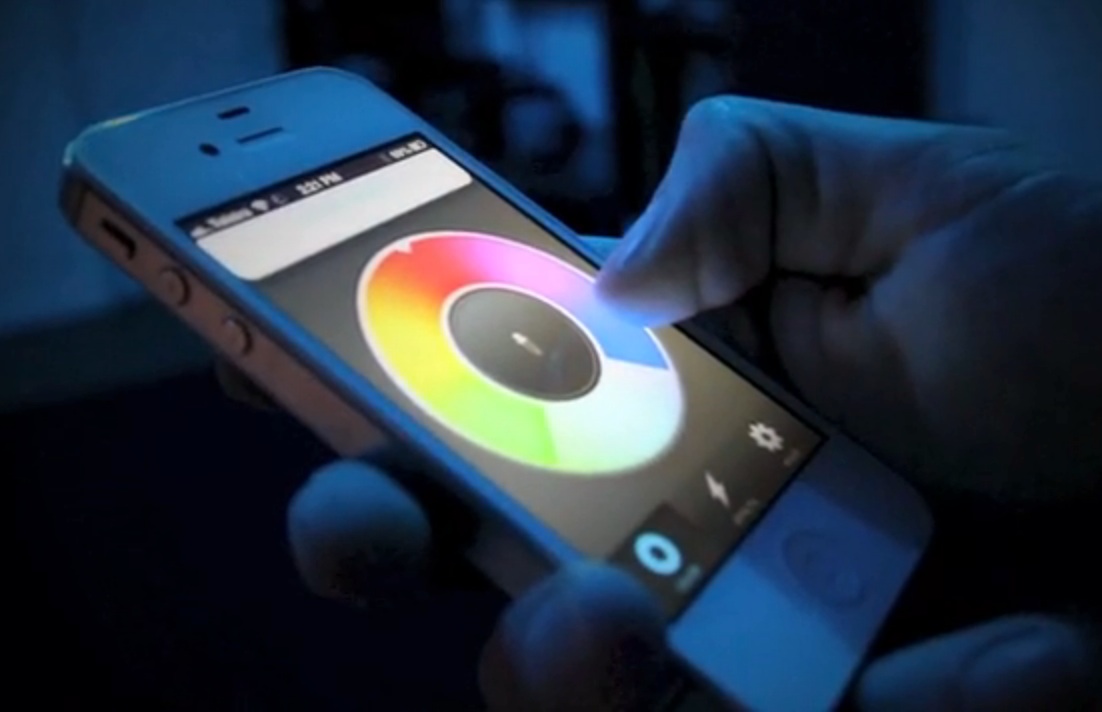
Driven partly by innovation and partly by pure necessity — regular old incandescent bulbs are slowly being phased out in favor of energy-efficent ones — the newest wave of lightbulbs come with built-in technology that let consumers control them with simple mobile apps, so they can turn on, turn off and create ambient scenes with the flick of a smartphone.
And despite the high cost of LED bulbs, consumers seem to be turned on by them.
In November of last year, Philips Electronics introduced Hue, a $200, ZigBee-connected lighting system. It works with energy-saving LED bulbs, and the bulbs are controlled over a home Wi-Fi network with an iOS or Android app.
In addition to offering natural lighting scenes, with Zen-like labels such as “Relax” and “Concentrate,” Hue lets consumers create color schemes based on photos from the iPhone’s camera roll. Sound gimmicky? I thought so, too, until a few Hue lights transformed my apartment, with its stunning views of brick and cement, into a convincing sunset scene at any time of the day.
Shortly after its launch, Hue was back-ordered for three to four months on Apple.com, Philip’s exclusive retail partner for the product.
Filip Jan Depauw, a senior global director at Philips, said there has been “unprecedented global demand for Hue,” though the company declined to say how many units have sold. Philips has since increased production to supply Apple stores with fresh Hue starter kits, which include three bulbs.
It’s the product’s “incremental approach” that have made them such a hit, Depauw says. “It gives the consumer the opportunity to get an energy-efficient product that is future-proof, growing at a pace that is comfortable to the consumer.”
LIFX_1
Just prior to the launch of Hue, a Wi-Fi-controlled, multicolored LED bulb called LIFX was all the rage on the crowdfunding site Kickstarter. Its creator far exceeded his fundraising goal of $100,000, raising more than $1.3 million dollars in preorders to help with production of LIFX.
Next week, companies like Spark and GreenWave Reality will also show up at the Vegas gizmo show. GreenWave Reality distributes Wi-Fi LED lightbulbs through utility companies; last year, the company nabbed two CES Innovations awards. Start-up Spark has created a solution for the less-expensive incandescent bulb: The Wi-Fi capabilities are in the $50 socket, not in the lightbulb, or in a bridge device that connects all of the bulbs.
It’s not just smartphone-controlled bulbs that are creating the latest wave in accessible home tech: Products like Wi-Fi-connected, easy-to-install thermostats, locks and alarm systems are also expected to have a presence at this year’s show.
In total, the Consumer Electronics Association expects to have more than 900 exhibitors that are focused on the connected home this year.
Jeff Joseph, the CEA’s senior vice president of communications and strategic relationships, says the idea of the “connected home” has changed since home tech first debuted at CES 13 years ago. “Whereas it used to be all about home control, now it means leveraging existing products we’re already using, including tablets and smartphones,” Joseph says.
“In the past, I think the whole industry thought it was about the Smart Grid,” says Tom Kerber, director of home research at Parks Associates. “Most of the industry has transitioned to more consumer-centric use cases, instead of energy-focused applications.”
To be sure, consumers can still expect to see some high-tech chill boxes (what I’ll call the “tweeting fridge”) and smart washers and dryers again this year. Many of these tricked-out home appliances have been marketed as Smart Grid-ready, and are often designed to work with consumer-friendly smartphone apps.
SamsungFridge_1
LG Electronics promises its new smart appliances — some of which are NFC-equipped — will let the user start a load of laundry while driving home from work, tell their robotic cleaner to vacuum the floor before company arrives, or view the refrigerator’s inventory of food items via their smartphone. Whirlpool is introducing a Bluetooth-capable CoolVox refrigerator, which lets consumers play music directly through the refrigerator from an app on an iPhone or tablet.
But these are costly major home appliances that have a life cycle of seven years or more. The average refrigerator’s lifespan, according to data published by Appliance Magazine in 2011, is 13 years. (And, as I’ve experienced, accessing Twitter and other Web apps from the fridge itself isn’t exactly intuitive.) Of the 9.7 million refrigerators that shipped in the U.S. and Canada in 2011, it’s estimated that a single-digit percentage of them were “connected.”
“The product lifestyle of something like lightbulbs could lend itself to consumer adoption,” Kerber says. “The maturity of technology is just accelerated now.”
Though, he adds, the cost of expensive LED bulbs could still be a deterrent for consumers. And while more-accessible home tech may be a gateway drug to the “connected home,” there’s a real risk that too much fragmentation could create a less-than-relaxing environment.
It’s one thing to come home from work and fire up a couple of mobile apps. It’s another thing to use one app to turn off the home security system, another to open the front door, and yet another app to turn on the lights. And that’s without even touching the apps for your Nest thermostat or Samsung refrigerator.
For that reason, some exhibitors at CES will take more of a “platform” approach. Home-improvement retailer Lowe’s is one such company: It plans to show off new products next week that all work on the company’s home-connectivity hub, called Iris.
These products include a smartphone-and-Web-controlled lawn-sprinkler system and a “smart” pet door that tells you Fido’s whereabouts.
International CES runs from Jan. 8 to Jan. 11, and AllThingsD will be there with coverage of connected home developments and all the other emerging trends and new devices.

Lauren Goode
Article By:
Lauren Goode - AllThingsD.com